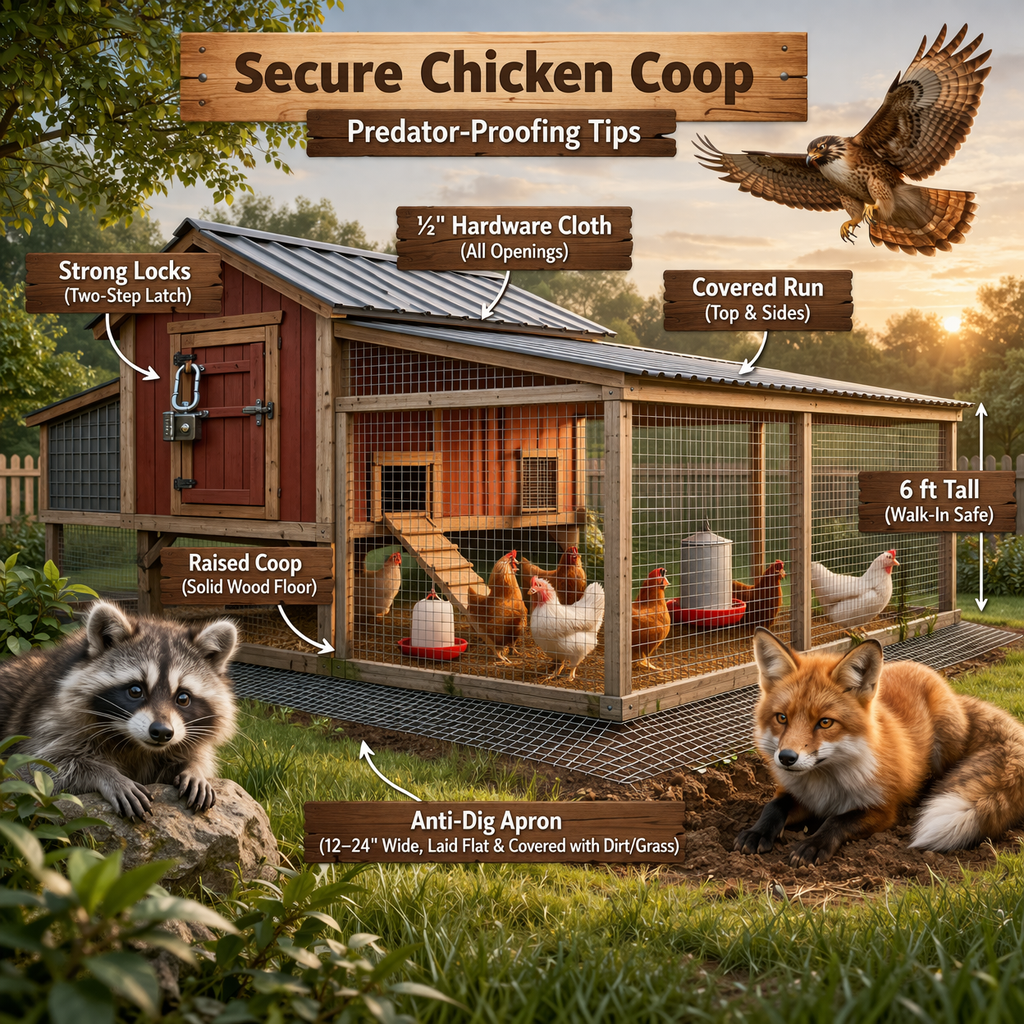
Backyard chickens are a rewarding addition to any home—but they also attract predators. In many parts of North America (especially rural and wooded areas), raccoons, foxes, and hawks are the most common threats. Each predator has different hunting styles, which means protecting your flock requires a layered approach.
This guide walks you through how to secure your coop and run so your chickens stay safe year-round.
Understanding the Threats
Raccoons (the masterminds
Raccoons are the most dangerous backyard predator because they are:
- Highly intelligent (can open latches and doors)
- Nocturnal hunters
- Able to reach through gaps and pull chickens apart
Key risk: Small openings, weak latches, unsecured doors
Foxes (the opportunists)
Foxes are:
- Excellent diggers
- Fast and stealthy
- Active at dawn and dusk
Key risk: Digging under fences or slipping through gaps
Hawks (the aerial hunters)
Hawks rely on:
- Daytime attacks from above
- Open spaces without cover
Key risk: Uncovered runs or free-ranging birds
Building a Predator-Proof Coop
A secure coop is your first line of defense—especially at night when most attacks happen. Raised coops not only keep floors dry, but they are harder for predators to get in. Install solid wood floors so there is no exposed ground. Make sure to use heavy, multiple stepped locks on any doors. And install ventilation near the roof and make sure to cover it with hardware cloth.
1. Use Hardware Cloth, Not Chicken Wire
- Chicken wire keeps chickens in—not predators out
- Use ½-inch hardware cloth on all openings
- Cover vents, windows, and gaps
2. Install Predator-Proof Latches
- Use two-step locks (like carabiners or spring clips)
- Avoid simple slide latches—raccoons can open them
3. Eliminate All Gaps
- Seal holes larger than ½ inch
- Reinforce corners, seams, and roof edges
Securing the Run (Where Most Attacks Happen)
4. Prevent Digging
- Bury hardware cloth 12–24 inches deep, OR
- Create a hardware cloth apron extending 12 inches outward along the ground
This stops foxes and other diggers before they get under the fence.
5. Cover the Top
- Use netting, wire, or solid roofing over the run
- Essential for hawk protection
- Also deters climbing predators
6. Use Strong Fencing
Minimum height: 6 feet
- Add an outward overhang if predators climb
- Consider electric poultry netting for extra security
Nighttime Safety Routine
Chickens are most vulnerable at night—this is when raccoons and foxes strike.
- Lock chickens in the coop every evening
- Use automatic coop doors if you’re not always home
- Double-check latches before dark
Smart Yard Management
Predator-proofing isn’t just about the coop—it’s about your entire yard.
Remove Attractants
- Store feed in sealed containers
- Clean up scraps and spilled grain
- Secure trash bins
Reduce Hiding Spots
- Trim tall grass and brush
- Remove woodpiles near the coop
Add Deterrents
- Motion lights & Solar Lights
- Livestock guardian animals (dogs, etc.)
- Reflective objects or noise deterrents (limited effectiveness but helpful)
- Hawk Kites to deter large birds without harming them
Seasonal Considerations (Cold Climate Tip)
In colder regions, predators get more desperate in winter, increasing attacks.
- Reinforce weak points before winter
- Check for gaps caused by snow or shifting ground
- Ensure coop ventilation doesn’t create entry points
Common Mistakes to Avoid
- Using chicken wire instead of hardware cloth
- Forgetting to secure the coop floor
- Leaving chickens out overnight
- Not covering the run
- Using easy-to-open latches
Final Thoughts
Predator-proofing isn’t about one fix—it’s about layers of protection. A well-secured coop, reinforced run, and consistent routine can reduce losses to nearly zero.
If you’re just starting out, focus on this priority order:
- Secure coop with hardware cloth
- Add strong latches
- Predator-proof the run (especially digging + overhead protection)
- Build a consistent nightly lock-up habit
 Hearth & Willow Co
Leave a comment